Sails
The very early solid hull yacht sails would have had cotton material sails with a hole punched into each corner and a single turn over hem, held to the mast and boom by cord threaded through the hole into the sail and knotted into place. Later 1920s yachts would have a single eyelet fitted on each sail down in the bottom corner nearest the mast the others would be plain punch holes.
Hollow yachts had a better quality sail material and eyelets fitted to all
punched holes.
Racing yachts had a thinner more lightweight grade of sail material called union
silk then later cambric. On the SB series, the leading and bottom edges were taped
and the remaining edge had a double hem.
Original sail material was purchased from Rosenthal of Blackfriars, Salford unfortunately the warehouse has now gone and the modern outlet does not stock material on the roll.
Top Tip**
If you are replacing you sails, for cotton sails if you want an age related
look, try purchasing vintage cotton bedding material, it looks so much better
than pristine bright white modern cotton material, for just a pair of sails buy
a vintage pillow case. If you are replacing cambric sails, purchase
natural colour (Waxed) cambric, use a cream coloured
edging tape and thread.
Eyelets are 3mm gold coloured, get the type with a backing washer, you can buy them in a kit together with an anvil & punch quite cheaply. Very late sails were fitted with 4mm eyelets.
3 widths of rigging cord were used according to the model of yacht, they were "Hard Lay" cord, meaning that they had less tendency to fray. Widths are roughly 1, 1.5 and 2mm in modern sizing. Some people opt for the builders chalk line from DIY stores, otherwise found online. When you have finished rigging and trimmed the ends back, dab some PVA glue on the cut ends to stop them from fraying.
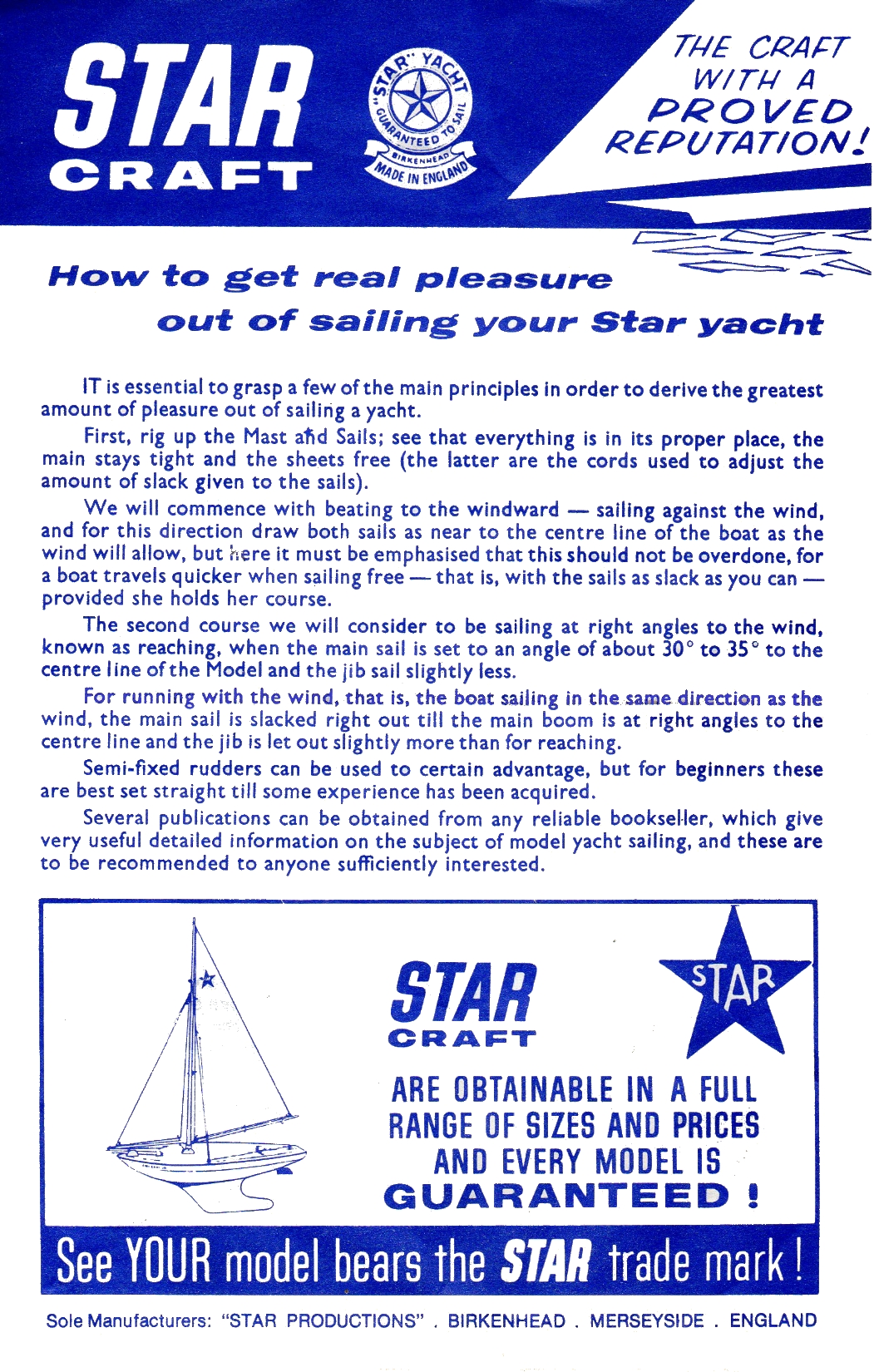
Below are the two pages of instructions enclosed with the yachts when sold.